
You probably landed here after mashing keys on a Hacker Typer site, watching green text fly across a black screen. It's a fun prank. The problem is that real attacks on small and mid-market businesses look nothing like the movies — and by the time you'd notice anything at all, payroll files are already sitting on a server in another country.
PGH Networks is a Pittsburgh-based managed services and cybersecurity provider. We help owners, office managers, and internal IT leads in the Pittsburgh metro understand what an actual intrusion looks like, and we put the controls in place so your business is not the next one explaining a ransomware note to its customers.
What a Real Attack Looks Like (Spoiler: No Green Text)
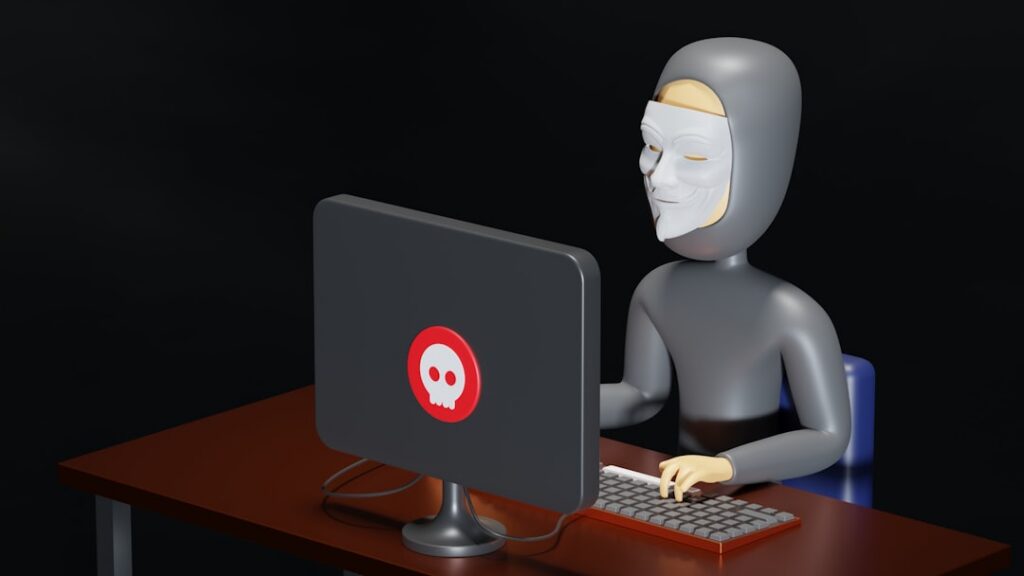
Hollywood and Hacker Typer show a person hunched over a terminal, furiously typing. Reality is quieter and much cheaper for the attacker:
- An employee in Cranberry gets an invoice email that looks like it came from a known vendor. They click. Credentials are harvested through a fake Microsoft 365 login page.
- The attacker logs in from a residential IP, reads email for two weeks, and sets up a forwarding rule so they can watch wire transfer conversations.
- On a Friday afternoon, they send a "revised banking details" email to your customer. Monday, a $48,000 payment lands in the wrong account.
Or the ransomware version: a single unpatched firewall, an exposed RDP port, or a reused password surfaces in a credential dump. An automated scanner finds it, a human takes over, and a weekend later every file server is encrypted. No typing montage — just an AWS-hosted note demanding Bitcoin.
The uncomfortable truth is that most breaches we respond to for Pittsburgh-area businesses would have been prevented by four or five unglamorous controls. That's what this page is really about.
Who This Is For
This page is written for decision-makers at small and mid-market organizations within about 75 miles of downtown Pittsburgh — including Wexford, Monroeville, Bethel Park, Washington, Greensburg, Beaver, Cranberry Township, and across the river into Weirton and Steubenville.
You're a good fit for a conversation with us if:
- You have between roughly 15 and 500 employees.
- You handle data that actually matters — patient records under HIPAA, CJIS data, CUI under CMMC 2.0, financial records, PII, or proprietary engineering files.
- Your IT is either outsourced to a break-fix shop, run by one overloaded internal person, or "handled by the guy who set it up years ago."
- You want to use AI tools (Copilot, ChatGPT Enterprise, custom agents) without handing your data to the internet.
What's Included in PGH Networks' Cybersecurity Stack
We don't sell a single product. We build a layered program and operate it for you. A typical engagement includes:
Identity and email protection. Microsoft 365 hardening, conditional access, MFA with phishing-resistant methods, impossible-travel and risky-sign-in alerting, and email authentication (SPF, DKIM, DMARC) so attackers can't spoof your domain.
Endpoint detection and response (EDR/MDR). A managed security operations team watching your laptops and servers 24/7, with the ability to isolate a compromised machine within minutes — not the next business day.
Network and perimeter. Next-gen firewalls, segmented VLANs, secured remote access (no raw RDP or unmanaged VPNs), and DNS filtering.
Patch and vulnerability management. Scheduled patching for Windows, macOS, and third-party apps, plus quarterly vulnerability scans against the CIS Controls and NIST CSF.
Backup and recovery. Immutable, offsite backups tested on a schedule, with a documented recovery runbook. If ransomware hits, you restore instead of negotiate.
Security awareness training. Ongoing phishing simulations and short training modules — because the firewall can't stop your controller from approving a fake wire.
Compliance alignment. HIPAA risk assessments, CMMC 2.0 readiness for DoD suppliers in the region, PCI scoping, and cyber insurance attestation support.
AI enablement, done safely. As part of our growing AI practice, we help you deploy Microsoft Copilot and other AI tools with proper data governance so "helpful" doesn't become "exfiltration."
Why PGH Networks
We're local. Our engineers drive to your office in Robinson, the Strip, Southpointe, or Murrysville — they don't dial in from three time zones away. We've worked with Pittsburgh manufacturers, medical practices, law firms, nonprofits, and DoD subcontractors, so we understand the regulatory and cyber insurance pressures that actually hit your desk.
We also believe a provider should be able to show, in plain English, what's protecting you and what's not. On day one we'll walk you through a written security baseline, mapped to a recognized framework. No black boxes, no "trust us."
Next Step: A 30-Minute Reality Check
If mashing keys on Hacker Typer was entertainment, this is the opposite — a 30-minute call where we look at your real exposure: what's published about your domain, where your credentials have already leaked, and the three or four highest-impact fixes you could make in the next 90 days.
There's no cost and no obligation. If we're a fit, great. If you just want a second opinion on what your current IT provider is doing, that's fine too.
Call PGH Networks or request a consultation through pghnetworks.com. We'll respond the same business day.