
Windows Update Breaks Domain Logins: What Pittsburgh SMBs Should Do
What happened
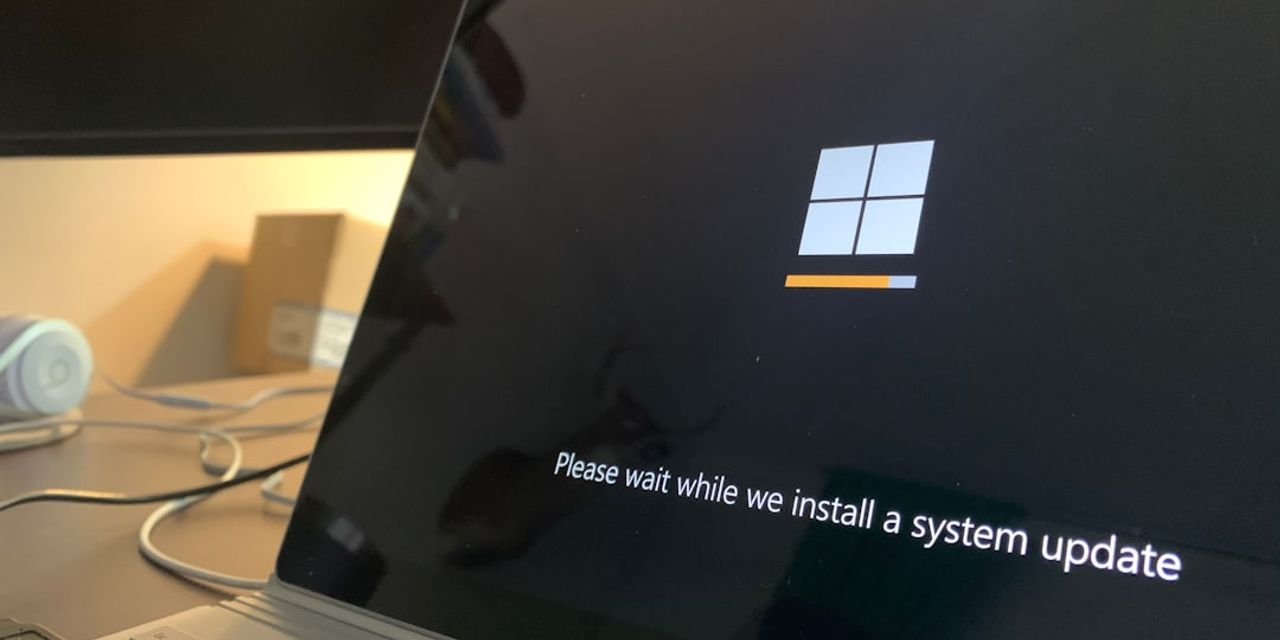
Microsoft has acknowledged a known issue in which Windows 11 machines refuse logins from valid Active Directory domain credentials after the September 2026 security updates are installed. On Wednesday the company published a temporary workaround while a permanent fix is developed, according to reporting from BleepingComputer.
We are treating the vendor's own advisory as the authoritative source for scope. Before you act, verify in the Windows release health dashboard exactly which builds and update packages are named, whether the issue is limited to certain Windows 11 versions, and whether Windows Server domain controllers or Windows 10 endpoints are implicated at all. Those details matter, and we are not going to guess at them here.

Why this matters for Pittsburgh SMBs
If you have a domain, this is your problem. Most of the 10-to-200-employee companies we support across Pittsburgh and the surrounding counties still run some form of Active Directory, either on-premises or hybrid-joined to Entra ID. A patch that blocks domain authentication does not degrade service quietly in the background. It locks people out of their own workstations at 7:45 a.m.
Picture the shapes that takes locally. A CPA firm in the middle of extension season, where a lost morning is unrecoverable billable time. A law practice whose document management system authenticates against the domain, so a login failure cascades into no access to matter files. A specialty medical practice whose front desk cannot reach the EHR, which means patients standing at the window while staff improvise on paper. A machine shop in the Mon Valley where the shop-floor terminals and the ERP are domain-joined and a shift starts without job tickets.
There is a compliance dimension too. Under HIPAA, an availability failure is a security incident worth documenting even when no data is exposed, and your SOC 2 auditor will ask how change management allowed a disruptive update into production. For defense contractors pursuing or maintaining CMMC Level 2, configuration management and system availability are in scope, and so is your ability to show a controlled, evidenced response. The event itself is not a finding. Having no record of how you handled it can become one.
The second-order risk is worse than the outage. When users cannot log in, someone reaches for a shortcut: a shared local administrator account, a disabled security control, a call to an unofficial number that turns out to be a help desk impersonation attempt. Attackers watch these news cycles. Login-failure chaos is exactly the cover a social engineer wants.
What to do about it
- Confirm the affected builds against Microsoft's advisory, not a summary. Pull the Windows release health entry and write down the specific KB numbers and OS builds. Then inventory which of your machines already have them. Guessing at scope leads to either panic or false comfort.
- Pause or ring-fence the September 2026 update ring today. In Intune, WSUS, or your RMM, hold further deployment of the named updates to production endpoints and servers until the permanent fix ships. Keep patching everything else, because unrelated vulnerabilities do not wait. Disciplined patch management is the whole point of rings.
- Apply the published workaround only to systems that actually need it, and document it. Record who applied it, when, on which machines, and what the rollback step is. If the workaround loosens any authentication behavior, treat it as a temporary compensating control with an owner and a review date, not a permanent config.
- Prove you can get in when domain auth fails. Verify break-glass access now: a known-good local administrator credential per site, out-of-band access to your domain controllers and hypervisors, and current documentation stored somewhere that does not itself require a domain login. Test it. Do not assume it.
- Tell your staff what a legitimate fix request looks like. One short message: here is the phone number and portal we use, we will never ask for your password, and if you cannot log in, call rather than clicking. That single note blunts the impersonation attempts that follow every widely reported outage. Reinforce it with your cybersecurity awareness training.
- Verify your restore path before you touch domain controllers. Confirm recent successful backups of your DCs and file servers, and confirm someone has actually validated a restore this quarter. Snapshot before any change to authentication configuration.
- Write the incident note while it is fresh. Two or three paragraphs: what happened, systems affected, actions taken, business impact, resolution date. That page is your evidence for HIPAA, SOC 2, FTC Safeguards, or a CMMC assessor, and it takes ten minutes now versus a scramble later. Set a calendar reminder for October 17, 2026 to confirm the permanent fix has shipped and the workaround has been removed.
Longer term, this is a nudge on identity architecture. If domain-only authentication is a single point of failure for your whole workforce, a conversation about hybrid identity, conditional access, and Microsoft 365 posture belongs on your technology roadmap this quarter.

How we help
PGH Networks manages patch rings, endpoint monitoring, and identity for small and mid-sized Pittsburgh businesses, which means our clients get vendor advisories translated into a specific action list for their environment, not a link to read on their own. We hold risky updates, test workarounds, keep break-glass access verified, and produce the documentation your auditor or prime contractor asks for.
Talk to us
Not sure whether the September updates already landed on your machines? Call us at 724.888.7007 or reach out through the contact form and we will check.
Related reading
FBI Warns FortiGate VPN Attacks Are Still Active
The FBI says FortiBleed attacks on exposed FortiGate SSL VPNs are ongoing and locking out admins. Here is what Pittsburgh SMBs should check this week.

FBI Warns FortiBleed Credential Theft Is Still Active
The FBI says the FortiBleed campaign against Fortinet FortiGate firewalls and SSL VPNs is still active. Here is what Pittsburgh SMBs should do this week.

ClickFix Attacks Now Hide Payloads in Your Browser Cache
ClickFix attacks now stage payloads in browser cache disguised as images. What Pittsburgh SMBs should verify and train on this week, a practical checklist.