
Solution
IT Compliance Services in Pittsburgh
IT compliance services in Pittsburgh for HIPAA, CMMC, SOC 2 and the other rules your industry lives under.
Compliance Requirements Keep Growing
Many Pittsburgh businesses now answer to at least one framework: HIPAA, PCI DSS, SOC 2 or CMMC. PGH Networks maps your environment to the rules that apply, closes the gaps and keeps the evidence your auditor, insurer or client will ask for.
Organizations often have more than one standard to meet, depending on the data they collect, store and use, and the cost of hiring in-house specialists to keep up keeps rising. Compliance has never been more critical, or harder to manage alone.
What You Get
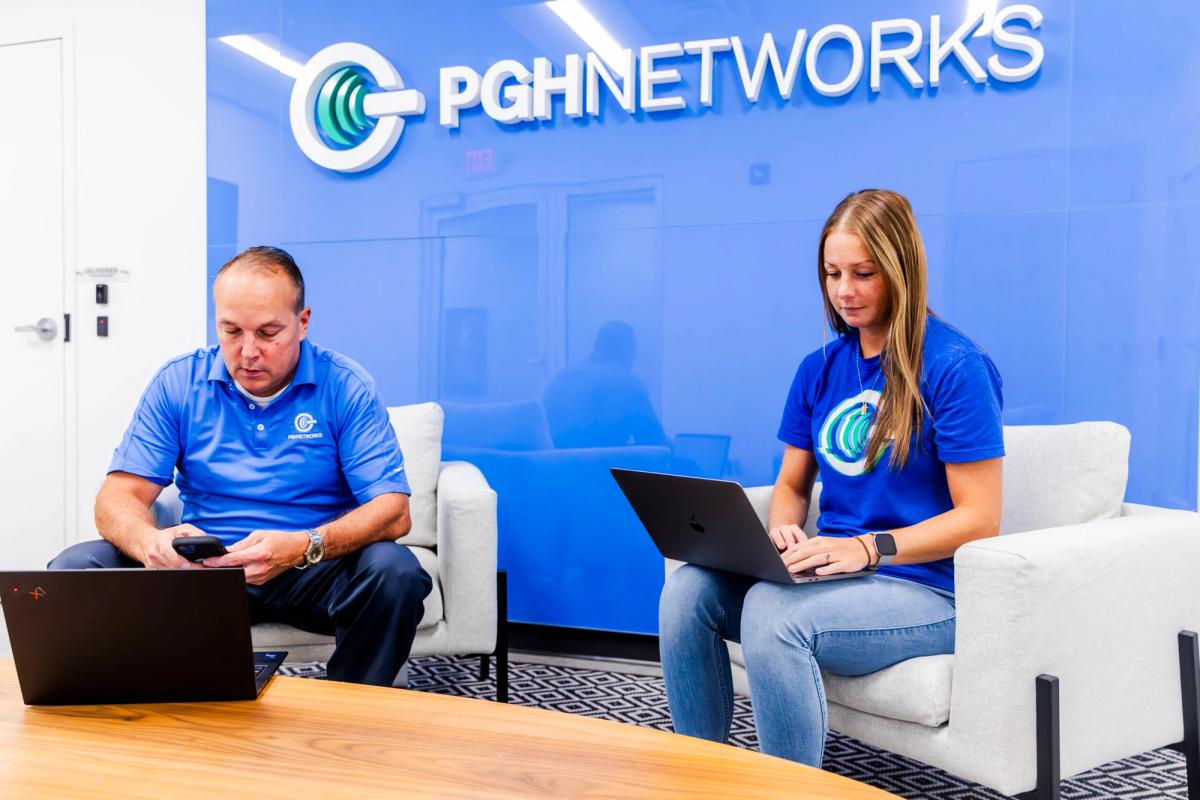
Owner-operated since 2013, PGH Networks provides IT compliance services in Pittsburgh from our office at 400 Holiday Drive.
We work inside HIPAA, CMMC and SOC 2 requirements regularly, so compliance documentation is a standard deliverable for us, not a special project. A compliance engagement covers:
- Risk assessment. We review your environment against the frameworks that apply to you and identify where your data is at risk.
- Written policies. The policies and procedures each framework expects, written for how your business actually works.
- Technical controls. Access management, multi-factor authentication, encryption, logging, endpoint protection and backup, put in place and monitored.
- Evidence collection. Control mappings and the evidence an auditor or assessor will ask to see, kept current instead of assembled in a rush.
- Audit support. We work directly with your auditor or assessor, before and during the audit.
- Add-ons when you need them. SIEM, vulnerability management, security awareness training and formal compliance attestation.
Frameworks We Support
These are the frameworks we work with most, and who they apply to.
- HIPAA: medical, dental and behavioral health practices and their vendors. See our IT for medical practices.
- PCI DSS: any business that takes card payments.
- SOC 2: service firms whose clients ask for a SOC 2 report. We get your controls and evidence ready; the report itself comes from an independent CPA firm.
- GLBA and the FTC Safeguards Rule: banks, lenders, wealth managers, CPA firms and other financial institutions that hold customer financial data. See our IT for financial services.
- CMMC and NIST SP 800-171: defense contractors handling Federal Contract Information or Controlled Unclassified Information. See CMMC compliance consulting in Pittsburgh.
- NIST CSF and CIS Controls v8: any business that wants a recognized security baseline. See our cybersecurity services in Pittsburgh.
We also work with SOX and EU GDPR requirements. If your industry answers to a framework that isn't listed here, ask: we help clients with any compliance need.
How We Keep You Compliant
Compliance comes down to three things: identifying risks, protecting against them, and responding quickly and clearly when an issue does occur. Where frameworks overlap on core controls like access management, encryption, logging and incident response, we build toward the strictest one you're subject to, which usually covers the others with less duplicated work.
Falling short is expensive: fines and penalties, legal and liability fees, and lost client trust, on top of the cost of the incident itself. That's why we treat compliance as ongoing rather than something to fix after an audit notice arrives. Our managed IT services in Pittsburgh keep the controls working day to day between audits. Talk to us about your compliance requirements.
Frequently asked questions
Which compliance frameworks do you support?
We work with the frameworks most common to our clients, including HIPAA, PCI DSS, SOC 2, CMMC, NIST SP 800-171, NIST CSF, CIS Controls v8, GLBA and the FTC Safeguards Rule, SOX and GDPR. Which ones apply to you depends on your industry and the data you handle, and many businesses need to satisfy more than one at once.
What happens if we fail to meet a compliance requirement?
Beyond the direct cost of an incident, non-compliance can mean fines, legal and liability exposure, and lasting damage to client trust, often outweighing the cost of the compliance work itself. That's the case for treating compliance as ongoing rather than something to fix after an audit notice arrives.
We already have security tools in place. Do we still need a compliance review?
Usually yes, since tools alone don't equal compliance. Frameworks require documented policies, evidence you can produce during an audit, and processes for identifying and responding to issues, not just the technical controls themselves. We assess what you have against what the specific framework requires and close the gaps.
How do you help during an actual audit?
We help identify risks ahead of time, implement the technical and policy controls a framework requires, and prepare the evidence you'll need to show an auditor, so there shouldn't be surprises by the time the audit happens. We also work directly with your auditor or assessor during the audit.
Can one IT setup satisfy multiple compliance requirements at once?
Often, yes. Many frameworks overlap significantly on core controls like access management, encryption, logging and incident response. We build toward the strictest framework you're subject to where they overlap, which usually covers the others with less duplicated work than treating each one separately.
Owner-operated in Pittsburgh since 2013
Let's talk about your IT.
A free, no-pressure look at where your IT stands, from a local Pittsburgh team.