
Cyber Security Companies in Pittsburgh

If you are shortlisting cyber security companies in Pittsburgh, you are usually reacting to something specific: a failed insurance questionnaire, a client security addendum, a phishing incident, or a compliance deadline you cannot miss. This page walks through the exact five-step process PGH Networks uses to take a Pittsburgh-area business from "we think we're okay" to a defensible, documented security posture — without ripping out the tools you already own.
Most cyber security companies in Pittsburgh will sell you a stack. Our process starts with the risk, maps it to the regulations your buyers and insurers actually enforce, and only then decides what technology belongs in your environment.
Who this process is for
This is written for owners, CFOs, and IT directors at 20 to 500-person organizations inside roughly 75 miles of 15220 — Downtown, the South Hills, North Hills, Cranberry, Robinson, Monroeville, Washington, Greensburg, and Beaver County. It fits manufacturers navigating CMMC for DoD supply-chain work, healthcare and behavioral-health practices under HIPAA, professional services firms handling PII, and nonprofits or municipal contractors whose cyber insurance renewal just got harder. If you have no internal security lead — or one stretched engineer wearing five hats — this process is built for you.
The organizations that get breached in Western PA are rarely the ones without tools; they're the ones without a process tying those tools together.

Step 1: Scope your risk against Pittsburgh-specific threats
We start with a two-week assessment that catalogs your assets, identities, data flows, and third-party connections, then scores them against the threats we actually see hitting Pittsburgh-region businesses: business email compromise targeting AP teams, ransomware entering through unmanaged VPN appliances, and vendor-account takeover in the manufacturing supply chain. The output is not a 90-page PDF you shelve. It is a ranked list of what will get you breached first and what it will cost to fix.
- Asset and identity inventory (Microsoft 365, endpoints, servers, SaaS)
- External attack-surface scan of public IPs and domains
- Review of current cyber insurance application answers vs. reality
- Data classification for regulated records (PHI, CUI, PCI, PII)
Step 2: Close the gaps auditors and insurers flag first
TL;DR: Before buying new tools, we fix the five controls that cause the majority of denied insurance claims and failed audits in this region.
Roughly 80% of the value in a security program comes from a small set of controls done well. In this step we enforce phishing-resistant MFA on every identity (not just email), deploy or tune endpoint detection and response, lock down local admin rights, implement immutable backups tested by actual restore, and put a real email security layer in front of Microsoft 365 or Google Workspace. These are the same controls that Erie Insurance, Chubb, and Travelers questionnaires quietly require — and the ones that separate credible cyber security companies in Pittsburgh from resellers.
Step 3: Deploy 24/7 monitoring and response
Attackers do not keep business hours, and neither can your detection. In this step PGH Networks connects your endpoints, identities, firewalls, and cloud tenants into a 24/7 SOC with defined response playbooks. When an alert fires at 2:47 a.m. on a Sunday, an analyst is isolating the endpoint and calling your on-call contact — not emailing a ticket. We also stand up a written incident response plan with named roles, legal and insurance contacts, and a communication tree, because the first hour of a breach is not the time to figure out who calls the carrier.
Step 4: Align controls to HIPAA, CMMC, PCI, or SOC 2
Compliance is where generic providers lose the plot. We map the controls deployed in Steps 2 and 3 to the specific framework driving your business: HIPAA Security Rule for practices in Bethel Park, Wexford, and Monroeville medical corridors; CMMC Level 2 for machine shops and metal fabricators in the Mon Valley and Beaver County feeding DoD primes; PCI DSS 4.0 for retail and hospitality; and SOC 2 for SaaS and professional services firms whose enterprise customers now demand a report. You get a control matrix, a System Security Plan where required, and evidence collection that survives an actual assessor — not a self-attestation checklist.
- HIPAA risk analysis and Security Rule documentation
- CMMC Level 1 or Level 2 readiness with SSP and POA&M
- PCI DSS 4.0 scoping and SAQ support
- SOC 2 Type I and Type II readiness partnering with your auditor
Step 5: Operationalize security with AI-aware workflows
The newest exposure in Pittsburgh businesses is not ransomware — it is unmanaged AI. Employees pasting client data into public ChatGPT, Copilot licenses turned on without permission cleanup, and shadow agents pulling from SharePoint sites nobody has audited in years. This is where PGH Networks' AI-enablement practice makes us different from other cyber security companies in Pittsburgh: we help you adopt Microsoft Copilot and other AI tools safely by fixing the permissions model underneath, writing an acceptable-use policy your staff will actually follow, and running quarterly phishing simulations and tabletop exercises tuned to AI-generated attacks.
A Copilot rollout on top of a decade of loose SharePoint permissions is a data-leak project waiting for a headline.
Next steps
If you are actively comparing cyber security companies in Pittsburgh, the fastest way to see whether this process fits is a 30-minute scoping call followed by a fixed-fee assessment. Bring your latest cyber insurance application, any client security questionnaire you are stuck on, and a rough headcount. We will tell you honestly whether you need a full program, a targeted remediation, or just a second opinion. Call the Pittsburgh office at 724.888.7007 or request an assessment through our contact form to get on the schedule.
Related reading
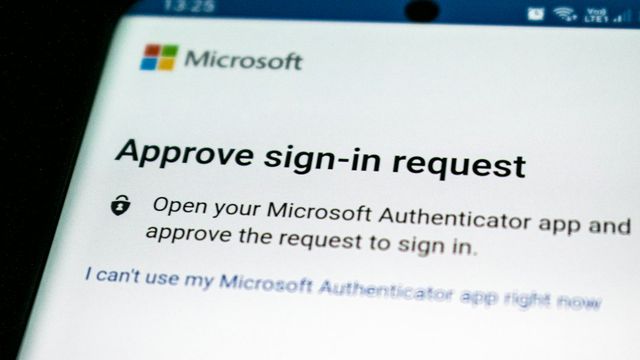
MFA Alone Won't Stop This Microsoft Phishing Technique
A China-linked group is using Microsoft adversary-in-the-middle phishing to bypass MFA. What Pittsburgh SMBs in legal, CPA and defense work should do now.

Phishing Emails Are Installing Remote Access Tools on SMB PCs
Microsoft warns of phishing that installs legitimate RMM tools to gain remote access. What Pittsburgh SMBs should lock down this week, a practical checklist.

Ransomware Gangs Are Now Exploiting Critical VMware vCenter Flaw
CISA says ransomware crews are exploiting a critical VMware vCenter RCE bug. What Pittsburgh SMBs running on-prem VMware should verify and patch this week.