
AI Workflows for Construction Companies
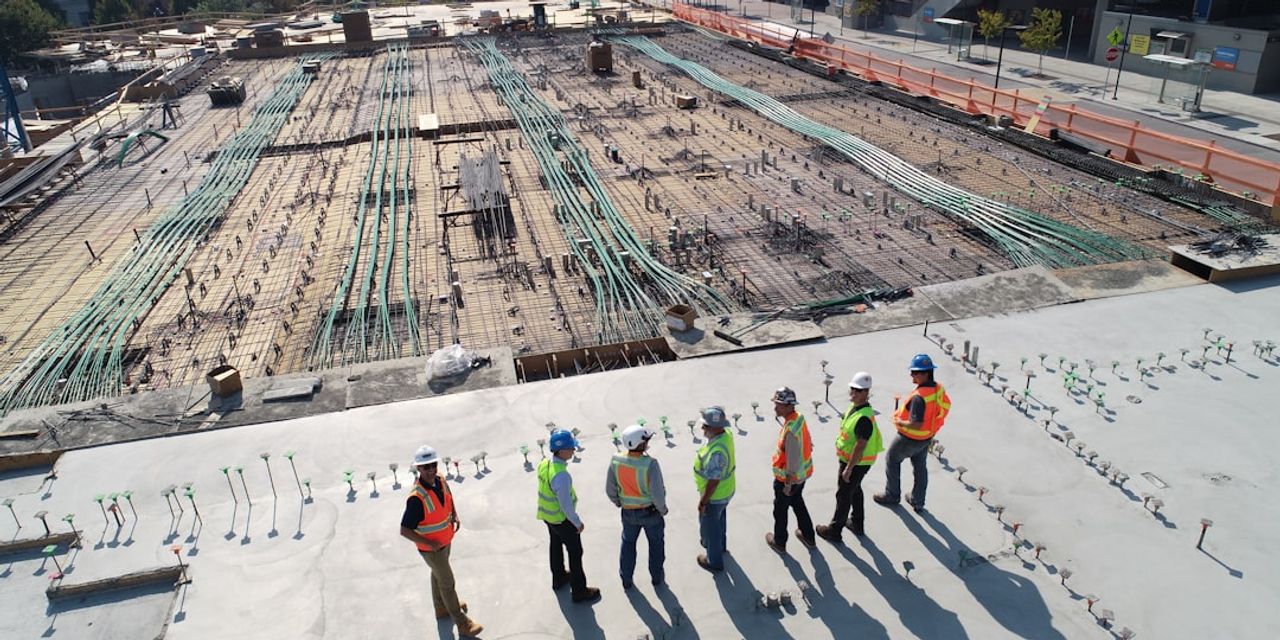
A 60-person general contractor headquartered in the Strip District had a familiar problem: three active commercial jobs across Allegheny and Washington counties, a shared drive stuffed with 40,000 PDFs, and two project managers spending their evenings hunting for the current revision of a mechanical submittal. RFI turnaround was pushing eight business days. The controller was still assembling AIA G702/G703 pay applications by hand on the 25th of every month. The owner had heard the pitch for AI workflows for construction companies at a trade event and wanted to know what was real, what was hype, and what could ship before the next project kicked off in Cranberry.
That is the kind of engagement our AI-workflows practice was built for: not a moonshot, not a rip-and-replace of Procore or Sage, just tightly scoped automation wrapped around the documents and decisions that already move the business.
The challenge
The pain was not a lack of software. The firm already ran Procore, Bluebeam, Sage 300 CRE, and Microsoft 365. The pain was the connective tissue between them, and the volume of unstructured paper that never fits neatly into any single system:
- Architect-issued RFI responses that had to be reconciled against three revisions of a spec section.
- Subcontractor submittals arriving as email attachments, with product data sheets that needed to be checked against the specified basis-of-design.
- Change order pricing that required a PM to dig through daily logs, timecards, and supplier quotes.
- A monthly pay-application cycle where 60% of the controller's time was spent copying values, not reviewing them.
The bottleneck was never the software license, it was the 20 minutes a PM lost every time they opened a folder looking for the current revision.
Layer on the Western PA labor market, where hiring another project engineer to absorb the paperwork was quoted at 14 weeks and $85K fully loaded, and the ROI math on automation started to look obvious.

How it was solved with AI workflows for construction companies
We began with a two-week AI readiness assessment to inventory data sources, map who touched which document, and set an acceptable-use policy so nothing containing owner-confidential pricing hit a public model. From there, three workflows shipped in sequence over about ten weeks.
Submittal intake and spec-compliance check. A custom AI application monitored a shared mailbox, extracted the submittal metadata (spec section, sub, product, revision), compared the product data sheet against the relevant spec section pulled from the project manual, and posted a draft compliance note into Procore with the exceptions flagged. The PM reviewed and approved rather than authored from scratch.
RFI drafting assistant. Using Azure OpenAI grounded on the project's drawings, specs, and prior RFI log, the tool produced a first-draft response for the PM, with citations back to the sheet number and spec paragraph. Nothing sent to the architect without human sign-off.
Pay-app assembly. A document automation routine pulled committed cost data from Sage, schedule-of-values line items, and stored lien waivers, then produced a draft G702/G703 packet plus a variance memo highlighting any line that moved more than 5% month over month.
TL;DR: We did not replace Procore or Sage, we automated the human copy-paste work that sits between them.
Underneath all of this ran the same managed IT and cybersecurity stack we deploy for every client: identity hardening in Entra ID, Microsoft Purview labels on anything containing owner financials, EDR on every field laptop, and conditional access so a lost iPad on a jobsite in Robinson Township is not a breach.
Outcomes
After the first full month of the three workflows running in production, the firm's own numbers (their tracking, not ours):
- Average RFI draft time from 45 minutes to under 10.
- Submittal log kept current in Procore without a dedicated coordinator.
- Monthly pay-app assembly cut from roughly three business days to one, freeing the controller to actually audit the variance memo instead of chasing signatures.
- Two project managers reported reclaiming roughly a half-day per week, which the firm redirected to preconstruction estimating on a fourth pursuit.
No headcount was eliminated. The owner's stated goal was capacity, not cuts, and the automation absorbed the growth that would otherwise have required that 14-week hire.
Who this fits
This pattern works well for GCs, design-build firms, and specialty trades in the Pittsburgh metro roughly in the $10M to $150M revenue range. If you are running Procore, Autodesk Construction Cloud, or Sage/Viewpoint, and your project managers describe their week as "hunting for documents," the same three workflows generally apply with minor rewiring. Firms doing federal or DoD-adjacent work also benefit from pairing this with a CMMC Level 2 readiness track so that CUI on federal jobs is handled correctly from day one.

Why PGH Networks
Most MSPs in the region will sell you a solid help desk and patch management, and stop there. Our differentiator is a dedicated AI-workflows practice staffed by engineers who have built line-of-business automation, backed by a vCIO who will actually sit in your Monday PM meeting to see where the friction is. We are based within 75 miles of 15220, on-site in Pittsburgh, Cranberry, Washington, Greensburg, and Monroeville, and we own both the AI build and the IT that runs underneath it. When the submittal tool breaks at 7 a.m. on a pour day, one number gets called.
Takeaway and next step
The interesting question in 2026 is not whether AI belongs in construction, it is which two or three workflows in your specific shop are worth automating first. A scoped assessment, a defensible acceptable-use policy, and a ten-week build plan will get you further than any all-in-one platform pitch.
If you want to see what AI workflows for construction companies would look like against your actual RFI log and pay-app cycle, call us at 724.888.7007 or send a short note through the contact form. First conversation is a working session, not a sales deck.
Related reading

Agentic AI Attacks on Azure Tenants: What SMBs Should Do Now
JadePuffer is using agent-driven AI attacks to raid and destroy Azure resources. Here is what Pittsburgh SMBs should verify and harden this week.

AI Document Automation for Financial Services
Pittsburgh-based guidance on AI document automation for financial services: what to evaluate, where most providers fall short, and how to deploy it safely.

AI Automation for Law Firms in Pittsburgh
AI automation for law firms in Pittsburgh: intake, drafting, and document review workflows built with privilege, confidentiality, and PA Bar ethics in mind.