
AI Document Automation for Financial Services

If your firm is evaluating AI document automation for financial services, you are probably staring at the same problem from two angles: a mountain of loan files, KYC packets, brokerage statements, and insurance applications that still get keyed by hand, and a compliance team that is not going to let you pipe client PII into a random consumer chatbot. The question is not whether the technology works. It works. The question is which deployment model actually holds up under examiner scrutiny, integrates with your core systems, and does not create a new shadow-IT problem six months in.
This page is written for finance operators in the Pittsburgh metro, from downtown to Cranberry, Wexford, Monroeville, Robinson, and the Mon Valley, who are trying to separate real options from vendor theater.
Why AI document automation for financial services matters right now
Community banks, credit unions, RIAs, title agencies, and regional insurers in Western PA all share the same document-heavy workflows: new account onboarding, loan origination and servicing, trust and estate documents, claims intake, and quarterly statement reconciliation. Staff spend hours extracting the same twenty fields off the same handful of form types, then re-keying them into a core banking platform, LOS, CRM, or policy admin system.
Modern extraction models handle this in seconds with high accuracy, including messy scans, handwriting, and non-standard vendor statements. The upside is not just labor savings. It is faster funding decisions, fewer NIGO packets, cleaner audit trails, and analysts who spend their time on judgment work instead of transcription.
The bottleneck in most finance back offices is no longer the model's accuracy, it is the governance wrapper around the model.

Where most providers fall short
Buyers usually encounter three categories of options, and each has a predictable failure mode.
Point SaaS extraction tools are quick to demo and slow to integrate. They will pull fields off a pay stub or a K-1 beautifully, then hand you a CSV and walk away. Your team still glues the output into the LOS or core by hand, and your compliance officer still has no answer for where the document sat during processing.
National MSPs without local staff will sell you a platform license and a ticket queue. What they typically do not bring is a banker or CFO on the other end of the phone who understands why a 1071 field or a Reg B adverse-action letter cannot be "mostly right."
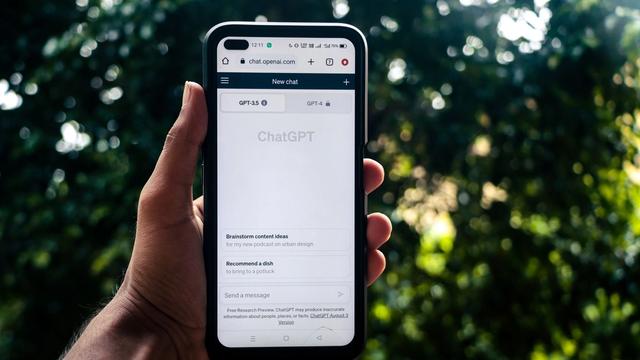
In-house pilots built on a free ChatGPT tier move fast until legal finds out. There is no data processing agreement, no tenant isolation, no logging, and no defensible answer when an examiner asks how customer NPI was handled.
TL;DR: The winning pattern is not the flashiest extraction accuracy, it is the boring combination of tenant isolation, human-in-the-loop review, and clean integration into the system of record.
What to look for instead
A defensible AI document automation for financial services deployment has a specific shape. Evaluate any proposal against this list:
- Data residency and tenant isolation. Processing should happen in your Microsoft 365 or Azure tenant (or an equivalent enterprise contract), not a shared consumer model. Microsoft 365 Copilot and Azure OpenAI both support this pattern.
- Human-in-the-loop by design. Every extracted field should carry a confidence score, and anything below threshold should route to a reviewer before it touches the core.
- Full auditability. Which document, which model version, which prompt, which reviewer, which timestamp. If your vendor cannot produce that record on demand, an examiner will not be amused.
- Integration with the systems you actually use. Jack Henry, Fiserv, FIS, Salesforce Financial Services Cloud, Encompass, Applied Epic, Redtail. Extraction that ends in a spreadsheet is not automation.
- Policy scaffolding. An acceptable-use policy, a model inventory, data classification aligned to GLBA and applicable state rules, and, where relevant, HIPAA and SOC 2 controls for firms handling health-linked benefits or plan data.
- Reversibility. You should be able to turn the workflow off, export your prompts and training data, and switch providers without a rebuild.
How this maps to our approach
PGH Networks runs finance-sector engagements in three phases, and the sequence matters.
We start with an AI readiness assessment: a short review of your document inventory, current handoffs, core systems, and existing Microsoft 365 or Google Workspace footprint. The deliverable is a ranked list of workflows by ROI and risk, not a sales pitch for a specific tool.
From there, our AI workflow automation team builds the extraction and routing pipeline inside your tenant, typically on Azure OpenAI or a purpose-built custom AI application when the workflow needs its own review UI. Sensitive data stays governed with Microsoft Purview labels, and every run is logged.
Underneath all of that sits the unglamorous foundation: managed IT for patch management and identity, cybersecurity with EDR and MDR so a document pipeline does not become a ransomware entry point, and ongoing vCIO guidance so the roadmap keeps pace with your examiners and your board. For firms doing DoD-adjacent work through affiliates, we also handle CMMC Level 2 alignment.

Who this is for
This engagement fits community and regional banks, credit unions, RIAs and wealth managers, title and escrow agencies, independent insurance agencies, and CPA firms serving financial clients, generally in the 20 to 500 employee range, headquartered within about 75 miles of 15220. If you already run Microsoft 365 and have a real compliance function, you are in the sweet spot.
Next step
If you want a straight answer on whether AI document automation for financial services makes sense for your specific workflows, we will do a 30-minute scoping call and tell you where the ROI actually is, or where it is not yet.
Call 724.888.7007 or send a short note through the contact form and we will get back to you the same business day.
Related reading

Agentic AI Attacks on Azure Tenants: What SMBs Should Do Now
JadePuffer is using agent-driven AI attacks to raid and destroy Azure resources. Here is what Pittsburgh SMBs should verify and harden this week.

AI Automation for Law Firms in Pittsburgh
AI automation for law firms in Pittsburgh: intake, drafting, and document review workflows built with privilege, confidentiality, and PA Bar ethics in mind.
Customer Facing AI Chatbot for Accounting Firms
Pittsburgh-built customer facing AI chatbot for accounting firms: secure client intake, tax-season triage, and portal support with clear guardrails and audit trails.