
AI Workflow Automation for Manufacturers in Pittsburgh
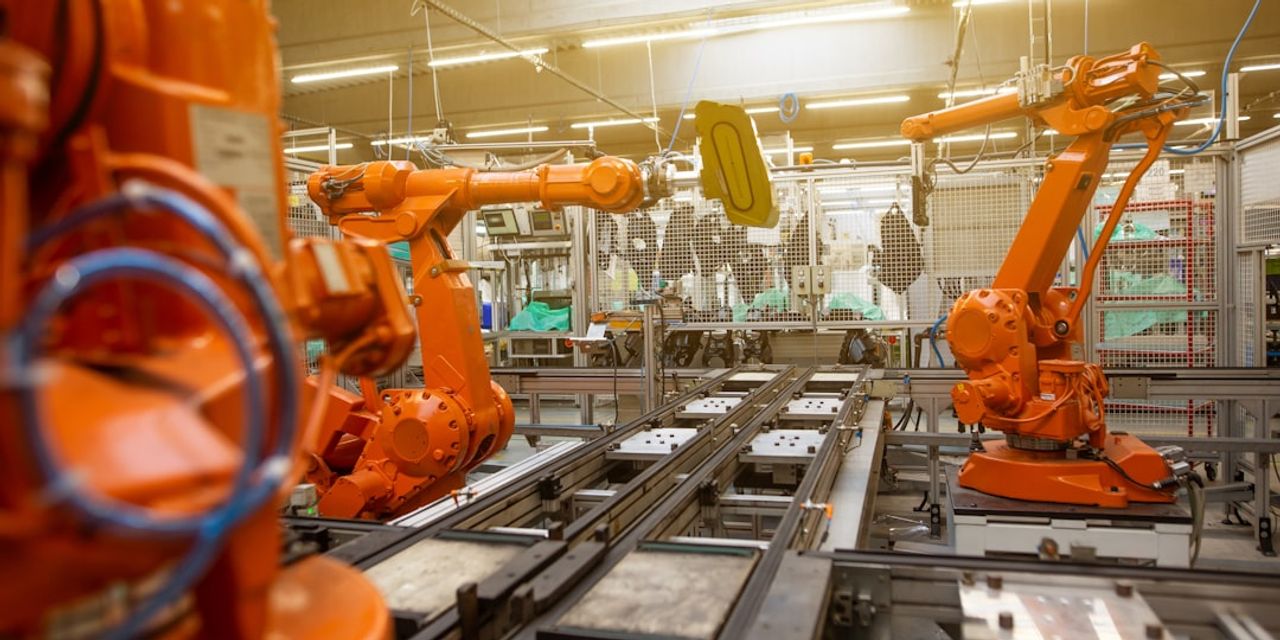
What if the real constraint on your next production run isn't a machine, a material, or a hire — but the three days an RFQ sits in someone's inbox before it becomes a quote?
Most shops we walk through in Neville Island, Cranberry, New Kensington, and along the Mon Valley have already squeezed the shop floor. Cycle times are tuned. Setups are documented. The slack that's left lives in paperwork: quoting, routing, travelers, CAPAs, supplier emails, ERP data entry, and the endless reconciliation between what a customer PDF says and what your system needs. That is exactly where AI workflow automation for manufacturers pays for itself, and it's the practice we've built at PGH Networks for small and mid-market plants across the Pittsburgh region.
The bottleneck in most Pittsburgh-area shops isn't the CNC — it's the human parsing a customer PDF at 4:30 on a Friday.
The bottleneck isn't your machines. It's the paperwork between them.
Walk the floor of a 40-person job shop and you'll see disciplined process. Walk into the front office and you'll see a estimator toggling between Outlook, a customer portal, a PDF drawing, ProShop or JobBOSS, and a spreadsheet that somehow still runs the business. Every one of those toggles is a place where AI, applied narrowly and carefully, can do the boring 80% and hand a human the interesting 20%. That's the whole thesis of our AI workflow automation practice: not "replace the estimator," but "give the estimator a first-pass quote packet before their coffee is cold."
Who this is built for
This page is written for owners, plant managers, and IT leads at manufacturers in the 75-mile radius around Pittsburgh — think Butler, Washington, Westmoreland, Beaver, and Allegheny counties — running somewhere between $5M and $150M in revenue. That includes:
- Job shops and contract manufacturers drowning in RFQ variability
- Fabricators and machine shops with heavy traveler and QC paperwork
- Tier 2/3 suppliers to primes who need CMMC Level 2 posture on anything touching CUI
- Family-owned plants where the person who "knows the system" is also the person who wants to retire
If you're a pure-play enterprise with a full internal AI team, you don't need us. If you're everyone else, keep reading.
What AI workflow automation for manufacturers actually looks like
Forget the demo-ware. Here is what real deployments look like on the ground in Western PA:
RFQ intake and quote drafting. A customer emails a PDF with drawings and a spec sheet. A workflow parses the PDF, extracts part numbers, quantities, tolerances, and materials, checks them against your historical quote data, and drops a draft quote in front of the estimator with flagged risks. Two days becomes twenty minutes.
Travelers, routers, and work instructions. Generate first-draft routings from a drawing plus a similar-part lookup. The methods engineer edits instead of authors.
Quality and CAPA. A custom AI application reads nonconformance notes, clusters them by likely root cause, and drafts the 8D so the quality manager isn't starting from a blank page at 6pm.
ERP and email glue. The unglamorous middle: pulling data out of one system, reformatting it, and dropping it into another, with a human approval step wherever a mistake would be expensive.
TL;DR: We automate the paperwork around production — quoting, routing, QC, and ERP data entry — with human-in-the-loop AI, not autonomous agents making pricing decisions on their own.
The pattern across all of these: narrow scope, measurable baseline, human approval on anything that leaves the building, and a rollback plan. We usually start with a short AI readiness assessment so we can tell you honestly which workflow will pay back fastest and which ones aren't ready yet — often because the underlying data lives in PDFs and tribal knowledge, not because the AI isn't capable.
Why a Pittsburgh MSP with an AI-workflows practice
There are three kinds of vendors circling manufacturers right now: pure SaaS platforms that assume you have an internal IT team, consultancies that deliver a slide deck and leave, and MSPs that will happily sell you licenses but have never shipped a working automation. We're trying to be a fourth thing.
Because we already run managed IT and cybersecurity for shops in this region, the AI work sits on infrastructure we understand. Your identity, your endpoints, your Microsoft 365 Copilot tenant, and your data governance are the substrate — and if they're wobbly, no automation on top will be stable. We build workflows that respect where CUI can and can't go, which matters when a prime asks about DFARS 7012 flow-down. We staff a real help desk in the Pittsburgh metro when the workflow throws an exception at shift change. And we can sit in a monthly vCIO session and tell you which workflow to build next based on your actual roadmap, not a vendor's quota.
We also don't pretend AI is a religion. Some problems are better solved with a Power Automate flow and a well-designed form. We'll tell you that too.
Start with one workflow
The manufacturers getting real value from AI in 2026 didn't buy a platform. They picked one painful workflow, instrumented it, automated it, measured it, and moved to the next one. That's the engagement we offer: pick the workflow, agree on the baseline, ship something working in weeks, and decide together what's next.
If you want to talk through which workflow in your shop is the right first domino, call us at 724.888.7007 or send a note through the contact form and we'll set up a plant visit.
Related reading
Agentic AI Attacks on Azure Tenants: What SMBs Should Do Now
JadePuffer is using agent-driven AI attacks to raid and destroy Azure resources. Here is what Pittsburgh SMBs should verify and harden this week.

AI Document Automation for Financial Services
Pittsburgh-based guidance on AI document automation for financial services: what to evaluate, where most providers fall short, and how to deploy it safely.

AI Automation for Law Firms in Pittsburgh
AI automation for law firms in Pittsburgh: intake, drafting, and document review workflows built with privilege, confidentiality, and PA Bar ethics in mind.