
Service
Proactive IT Monitoring
24/7 monitoring that catches issues before they turn into downtime.
Most outages and breaches announce themselves hours or days in advance through log entries, performance drift, failed backups, and unusual authentication patterns — signals that go unread when nobody is watching. Our proactive IT monitoring service puts a 24/7 NOC, mature RMM tooling, and a documented escalation process behind every server, endpoint, firewall, and cloud workload you operate, so small anomalies get resolved while they are still small. You walk away with measurably less downtime, fewer surprise tickets, and a written record of what is being watched and why.
TL;DR: We treat monitoring as a four-step engineering process — discover, instrument, tune, and respond — not a dashboard you log into hoping for green checkmarks.
Step 1: Discover and baseline your environment
Before we add a single agent, we run a structured discovery across your network, identity stack, endpoints, servers, SaaS tenants, and cloud infrastructure. The goal is a complete asset inventory and a behavioral baseline: what "normal" CPU, memory, disk I/O, login geography, and traffic patterns look like for your business, not a generic template. This baseline is what makes later alerts meaningful instead of noisy.
During discovery we also map business context onto assets — which server runs payroll, which switch carries the EHR traffic, which mailbox belongs to a finance approver. That context is what lets a Tier 2 engineer make the right call at 2 a.m. instead of paging you to ask.
- Network topology and dependency map
- Endpoint, server, and hypervisor inventory
- Identity, SaaS, and cloud tenant enumeration
- Backup and patch posture snapshot
Step 2: Instrument with layered telemetry
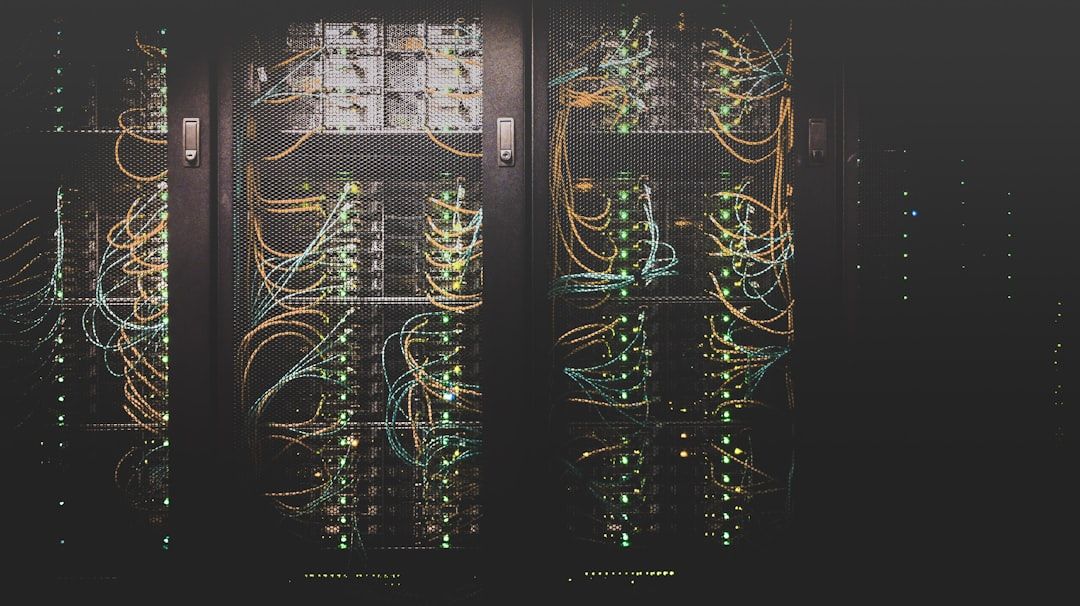
We deploy and configure the monitoring stack against the inventory: RMM agents on endpoints and servers, SNMP and flow collection on network gear, API-based monitors on Microsoft 365 and major SaaS, cloud-native checks for Azure and AWS, and EDR telemetry feeding the security side of the house. Where compliance requires it, we layer log aggregation and retention against HIPAA, CMMC, or SOC 2 control language so the same instrumentation serves both uptime and audit needs.
Monitoring without business context is just a dashboard; monitoring with business context is an early warning system.
Instrumentation is documented per asset class so you know what we collect, where it lives, and how long it is retained. No black boxes.
Step 3: Tune thresholds and suppress noise
This is the step most providers skip, and it is the one that decides whether your team trusts the system. For the first several weeks we actively tune — adjusting thresholds against the baseline, correlating related alerts so a single root cause does not generate twenty tickets, suppressing known-benign patterns, and writing runbooks for the alerts that remain. The output is a monitoring policy that fires when something actually warrants human attention.
Tuning is continuous, not one-and-done. Every post-incident review feeds back into thresholds and runbooks, so the system gets quieter and more accurate the longer it runs.
Step 4: Respond with a 24/7 NOC and documented escalation
Alerts route to our Pittsburgh-supported NOC around the clock. Tier 1 handles the high-volume, well-understood conditions against runbooks; Tier 2 and 3 engineers take ownership of anything novel, ambiguous, or security-relevant. Every action is logged in the ticket, and we publish a monthly review covering what fired, what we fixed, what we changed in the monitoring policy, and what trends are emerging across your environment.
For clients with an AI-enablement footprint, we extend the same discipline to model endpoints, vector stores, and workflow automations — surfaces that traditional MSPs frequently leave unmonitored. If a Copilot integration starts failing silently or a custom AI workflow is dropping jobs, you find out from us, not from a frustrated end user.
Step 5: Report, review, and improve
Each month you receive a written report: uptime by service, mean time to detect and resolve, top alert categories, patch and backup compliance, security events of note, and recommendations. Each quarter we sit down with stakeholders to review trends and decide what to invest in next. This rhythm is what turns monitoring from a cost center into a steadily compounding reliability program.
Why PGH Networks
We are a Pittsburgh-based MSP serving small and mid-market organizations across Allegheny, Washington, Westmoreland, Butler, and Beaver counties, with active clients in the South Hills, Cranberry, Monroeville, Robinson, and the Strip District. Our engineers work against documented practices aligned with HIPAA, CMMC, and SOC 2 control frameworks, which matters if you are in healthcare, defense supply chain, professional services, or finance.
What sets our proactive IT monitoring apart is the combination of disciplined NOC operations with a working AI practice. We monitor the systems your business runs on today, and we are equipped to monitor the AI workflows and custom applications you are likely to deploy over the next two years. Few regional providers can credibly do both under one roof.
Our engineers are local, our escalation paths are short, and the person who answers the phone has context on your environment.
Get a tailored proposal
Tell us what you are running and where you are feeling pain — silent outages, alert fatigue, audit pressure, or simply not knowing what is being watched. We will respond with a written scope, a fixed monthly price, and a clear picture of what your first 30, 60, and 90 days under proactive IT monitoring would look like. No pressure, no boilerplate.
Start the conversation here:
Frequently asked questions
How is proactive monitoring different from the alerts my tools already send?
Most tools ship with generic default thresholds and no correlation, which is why so many teams end up ignoring them. Proactive monitoring means tuned thresholds against your baseline, correlated alerts tied to runbooks, and a staffed NOC that acts on findings instead of forwarding them to your inbox.
Do I have to switch to your full managed IT service to get monitoring?
No. Monitoring is offered as a standalone engagement so internal IT teams can keep ownership of strategy and projects while we handle the 24/7 watch floor. Many clients start here and expand the relationship later, but that is your call.
What gets monitored — just servers and network, or cloud and SaaS too?
All of the above. Endpoints, servers, hypervisors, network gear, firewalls, Microsoft 365, Google Workspace, Azure, AWS, primary line-of-business SaaS, backup systems, and where applicable, AI workflow integrations and custom application endpoints.
How quickly will you respond when something fires?
Response targets are written into the agreement and tied to severity. Critical conditions — production-down, active security events, failed backups on protected systems — are acknowledged in minutes by a live engineer, not an autoresponder.
Can you support compliance evidence for HIPAA, CMMC, or SOC 2?
Yes. Log retention, access controls, alert handling, and monthly reporting are configured to produce the evidence auditors ask for. We will map our monitoring outputs to the specific controls in scope for your assessment.
Let's talk about your IT.
A free, no-pressure look at where your IT stands.